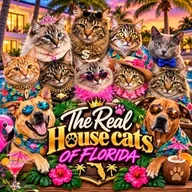
Who Wore It Best? Pet Halloween Costumes and the Reunion Drama
The cast was asked to dress up for Halloween. Tempers flared, a tiara was rejected, and a fish judged everyone. Here is the drama, plus how to costume a pet safely.
Oct 31, 2026 · 5 min read
Production on our Halloween special hit a wall at the first casting meeting. The producers wanted costumes. The cast wanted lawyers.
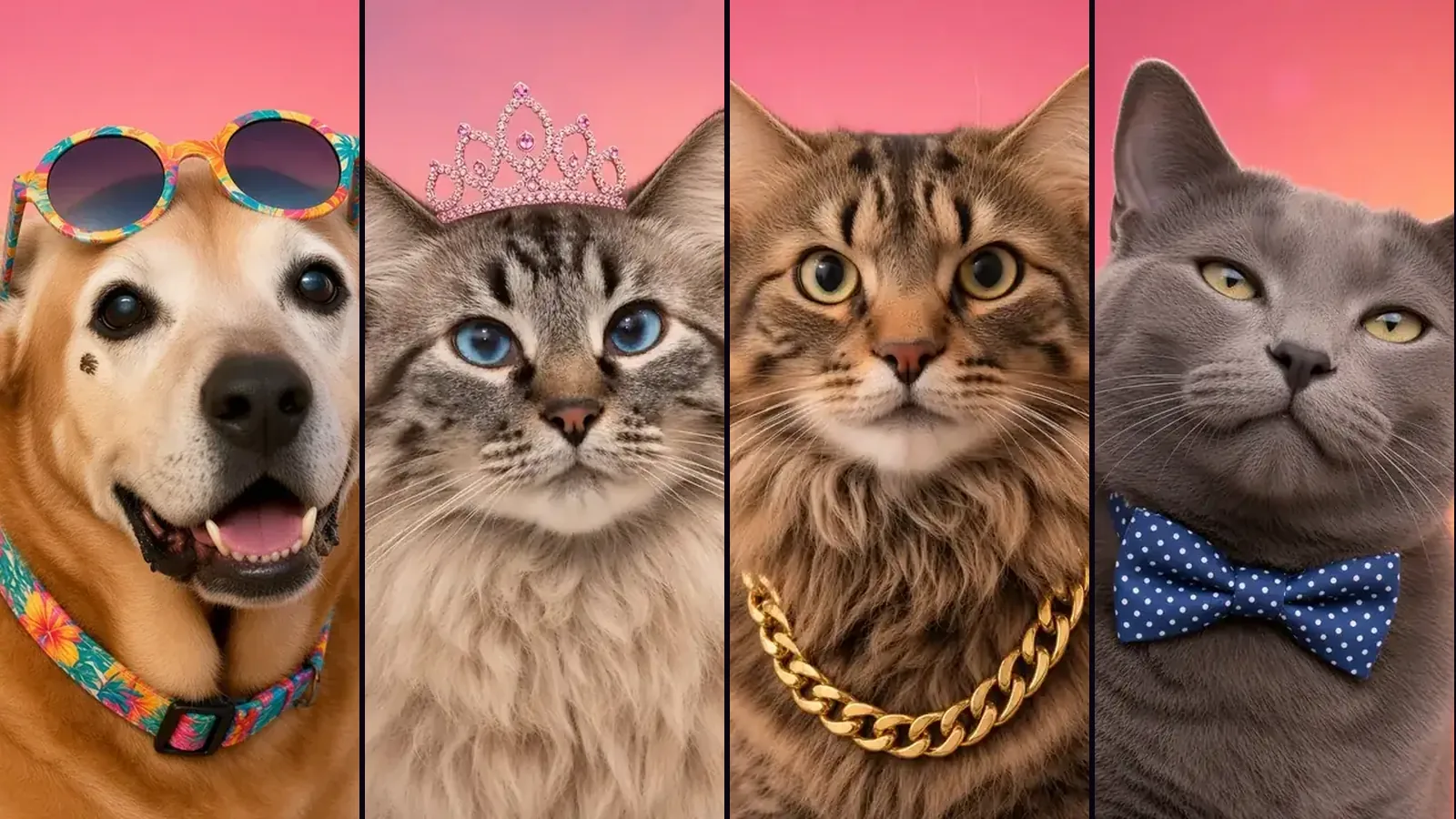
Quick disclosure: nobody in the cast was actually dressed for this story. The tiara and bow tie you can see in the portraits are the work of our glam squad, which is AI. The real pets, as you will see, have opinions. What follows are the pitches, plus the real safety rules, because the same questions keep coming up in searches for a cat Halloween costume or dog Halloween costume: is it safe, and will my pet hate it?
Do cats and dogs actually like Halloween costumes?
Some do. Plenty do not. The ASPCA says not to put a dog or cat in a costume unless you know they love it. AAHA adds that only pets already used to wearing clothes, like a jacket or sweater, should be dressed at all.
That is the whole reality-show premise in one sentence: everyone wants the spotlight until someone pulls out a hat.
Who wore it best? The cast's costume confessionals


- Meg, the Rags-to-Riches Queen: demanded a tiara. Verdict: no. A tiara slides over eyes, and the AKC lists gemstones and detachable decorations as choking risks. She will wear her attitude.
- Affogato, the Silent Intimidator: asked for a gold chain. Chains dangle, and dangling parts are exactly what AAHA and the ASPCA tell you to avoid. His stare is already intimidating enough.
- Smokey, the Silent Judge: would consider a bow tie sewn onto a Velcro collar, then sit on it. Dr. Jerry Klein of the AKC recommends Velcro over buttons, drawstrings or elastic.
- Bailey, the Retired Security Chief: pitched a bandana reading "SECURITY (RETIRED)". Winner of the simple-is-safest category, as long as someone supervises it.
- Kona, the Laundry Room Diva: will do anything for food and nothing for a hat. Her tagline is "I never miss a meal," not "I never miss a fitting."
- Figgy, our Local Grinch: refused on principle. Everyone agreed this was already her costume.
- Mackie, the Midnight Wildcard: bounces off walls and climbs door frames. Our own judgment: a cape on a climber is a snag waiting to happen, so he gets a day off.
- Simon, the Very Judgmental Fish: was never going to participate, and a fish does not get dressed. He watched the whole meeting through the glass and was unimpressed.
Final ruling from the judges' table: Bailey wins for sensible fashion, Smokey for dignity, and Simon for total disdain.
What makes a pet Halloween costume safe?
Experts agree on the basics. Run through this before you buy or sew anything:
- Fit. Measure your pet and follow the size chart. AAHA warns that too tight restricts movement, and too loose can trip them or trap a leg.
- Nothing small to chew off. The AVMA says no pieces that can easily be chewed off or cause choking. The AKC names beads, buttons, ribbons, snaps and elastic.
- Clear senses. The costume must not block sight, hearing, breathing, the mouth or movement. Skip masks and anything covering the face, says LSU's veterinary school.
- Keep it cool. Costumes can trap heat. In a warm place like Florida, AAHA suggests light, breathable fabric.
- Simple wins. A bandana, cape or plain shirt is safer than a full outfit with extras.
- Supervise. Never leave a costumed pet alone, because costumes can snag, shift or become a chew toy.
How do you know your pet hates the costume?
Look for the signs and believe them. The AKC lists panting, freezing, refusing to move, pawing at the costume and flattened ears for dogs, and also a tucked tail, cowering or pacing. AAHA names refusal to move, scratching or biting at the outfit, and subtle signs like lip-licking or yawning. LSU adds hiding and vocalizing. If you see any of them, take the costume off right away.
When should you skip the costume?
Skip it if your pet is not used to clothes, is fearful or handled reluctantly, is spending the evening near a busy front door, or struggles with heat or breathing. The AKC says dogs with breathing difficulties and thick coats are especially at risk of overheating. Better options, from the experts: a festive bandana or collar, a short photo shoot early in the evening, games, or pet-safe treats.
What is an easy DIY dog or cat Halloween costume?

- Bandana with a joke on it. "Retired security," "Reunion host," "Boo." Choose a soft, light fabric you can slip on and off.
- Practice first. The AKC suggests starting at least two weeks ahead: show the costume, treat, drape it over the back, treat, then put it on briefly, treat.
- Let them sniff your costume too. K-State's veterinary team notes that even familiar people can look frightening in a costume, so let pets see and smell it first.
- Skip glitter, dye and decorations. The AKC warns they can irritate skin or be harmful if swallowed.
Prefer a no-costume Halloween? Same fun: treat puzzles, a pumpkin patch walk, and a supervised bandana. Your pet will not judge you, unlike Simon.
Quick answers
Is it safe to put a Halloween costume on a cat or dog?
It can be, if your pet is used to wearing clothes and the costume fits, is simple, has nothing small to chew off, and does not block sight, hearing, breathing or movement. Supervise the whole time, and skip it if your pet is stressed (AVMA, AAHA).
Do cats like Halloween costumes?
Some tolerate them, but many do not. The ASPCA suggests not dressing a cat or dog unless you know they love it, and offering a bandana or a plain "birthday suit" if they seem distressed.
What is the safest pet Halloween costume?
The simplest one. AAHA points to a plain cape, bandana or one-piece shirt without extras, and the AKC notes a bandana should only be worn under supervision because it can snag.
How long should my pet wear a costume?
Only as long as they are comfortable. The AKC suggests that for many dogs a short photo session is enough, taken early while they are relaxed.
Sources
- AVMA: Halloween pet safety
- ASPCA: Halloween Safety Tips
- AAHA: Are Pet Halloween Costumes Safe?
- AKC: Halloween Dog Costume Safety Tips
- AKC: What Do Dogs Really Think About Halloween?
- LSU School of Veterinary Medicine: Halloween hazards
Not vet advice
This story is entertainment plus general information from the sources above. It is not veterinary advice. If your pet seems unwell or you are worried, call your veterinarian.